From classroom instruction to bedside decision-making, AI is helping bridge the gap between innovation and patient-centered care — laying the foundation for more efficient, equitable and responsive care.
By Megan Archer
At the intersection of technology and compassion, a new chapter in medicine is being written — one in which algorithms assist in diagnosis, software improves training and data analytics help clinicians deliver more personalized care. Artificial intelligence (AI), once confined to research labs and science fiction, is now transforming education and patient care across the region.
At the Marshall University Joan C. Edwards School of Medicine, efforts are underway to integrate AI across education and training programs, clinical practice and research, all with the goal of preparing a new generation of health care clinicians to work confidently alongside intelligent systems.
"AI is a powerful partner, but it can never replace the trust and connection between a physician and their patient."
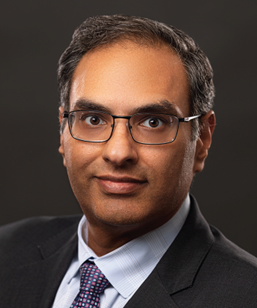
- Nitin Puri, MD, PhD, integrates AI across Marshall’s medical education and training programs.
“We view artificial intelligence as both a transformative technology and a practical tool already reshaping medical education,” said Nitin Puri, MD, PhD, senior associate dean and chair of medical education. “For this technology to enhance human health, physicians must have a deep understanding of its capabilities, its limitations and the ethics surrounding its use.”
The school’s “two-pronged approach,” as Dr. Puri describes it, begins with using AI to enhance learning. Adaptive learning platforms identify knowledge gaps and personalize study pathways, helping students master material more efficiently, while AI-assisted case generation allows students to practice clinical reasoning in realistic simulations before they engage directly with patients.
The second prong focuses on responsible use.
“Our curriculum emphasizes not only how these tools can aid diagnostics, predictive analytics and decision support but also the ethical and professional considerations — such as bias, privacy and patient trust — that accompany them,” Dr. Puri said. “Our vision is to graduate AI-literate physicians who can partner with technology to deliver better care, while preserving the critical reasoning and human connection that define the practice of medicine.”
"AI can help bridge gaps by citing guidelines, cross-referencing medications and supporting evidence-based decisions."
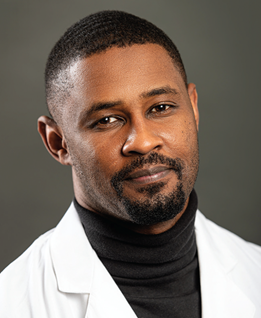
- Mujtaba Mohamed, MD
Across Marshall Health Network, AI is already transforming care in clinical practice. Gastroenterologist Mujtaba Mohamed, MD, an assistant professor of internal medicine, has integrated AI into his practice using GI Genius, an AI-powered system that detects polyps during colonoscopies.
“We use AI daily in our colonoscopy screening procedures,” Dr. Mohamed said. “Our fellows are taught to identify polyps and classify them according to malignant potential, but this software enhances their detection rate, ultimately improving patient outcomes.”
Another advancement is the use of AI-powered clinical documentation assistants (CDAs), such as Oracle’s ambient transcription tool, which act as digital scribes and organize clinical notes in real time.
“The technology is a game-changer,” Dr. Mohamed said. “It allows our residents and medical students to perform their roles more efficiently — interviewing patients, performing exams, analyzing charts and developing care plans — without worrying about transcribing notes later.”
Still, technology must support — not replace — the fundamentals of good medicine, Dr. Mohamed emphasized.
“I always inform my residents and medical students that they must put in the work in terms of navigating the chart, interviewing the patient and performing thorough physical exams,” he said. “Once raw clinical data is collected, AI can then help bridge gaps by citing guidelines, cross-referencing medications and supporting evidence-based decisions.”
Beyond technical accuracy, Dr. Mohamed said he views AI as a tool to strengthen patient relationships by minimizing mistakes and decreasing physician burnout.
“There is huge potential in specialties such as radiology and pathology where pattern recognition is predominant, as well as in interventional subspecialties where machine learning can be applied to robotic surgery and image analysis,” he said.
"There are vast unmet health care needs in the region that can significantly benefit from the incorporation of AI and data science."
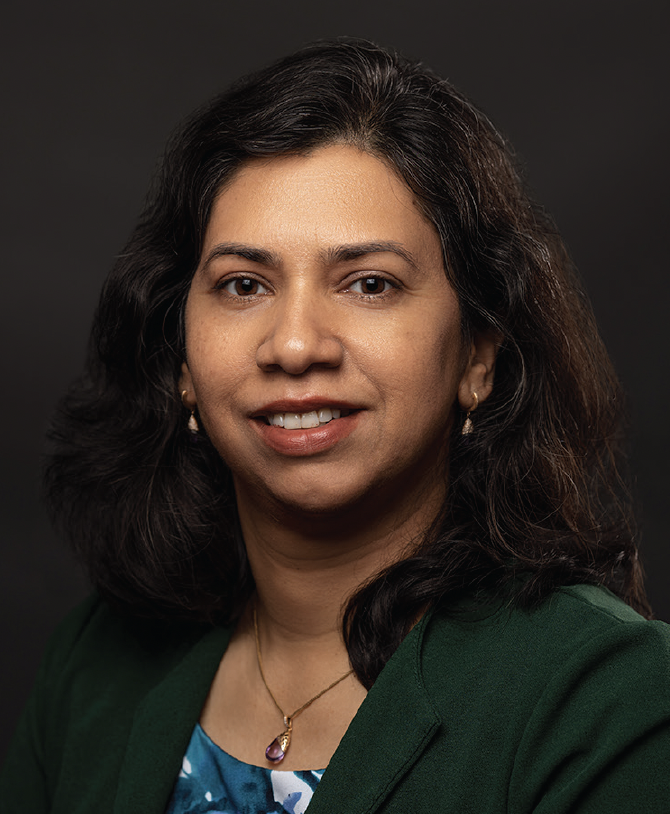
- Trupti Joshi, MBBS, ADB, MS, PhD
Extending AI’s impact from the bedside to the broader community, Trupti Joshi, MBBS, ADB, MS, PhD, senior associate dean for informatics and population analytics and director of the Translational Bioinformatics and AI Innovations Lab (TBAiL), leads research that bridges data science and health care across Appalachia.
At TBAiL, researchers use advanced AI techniques to decode biological data, predict disease risk and accelerate discovery. Their tools include G2PDeep, which links genetic and phenotypic data, and IRnet, which predicts cancer immunotherapy responses. Dr. Joshi’s team also developed WIRE (WV Immunotherapy Response Explorer), a clinician-focused platform that integrates predictions from these AI systems into a HIPAA-compliant interface.
“WIRE allows oncologists to upload patient molecular data and receive interpretable, pathway-level reports on likely immunotherapy outcomes,” Dr. Joshi said.
The projects are designed with West Virginia and rural communities in mind, she added.
“The Appalachian region has a very distinct population with a unique set of challenges,” Dr. Joshi explained. “There are vast unmet health care needs in the region that can significantly benefit from the incorporation of AI and data science.”
One example is Delphi-2M, an application that uses AI to forecast multiple diseases using de-identified electronic health records. By mapping data specific to West Virginia, the project aims to better understand risk factors tied to obesity, smoking and cancers.
While AI offers vast promise, Dr. Joshi said, its success must be measured by its ability to improve lives in a region where chronic illness and limited access to care persist.
“Incorporating AI tools and techniques into health care platforms in Appalachia can help us quickly revolutionize our health care system and turn the tide in our favor,” she said. “We can make an impact on the Appalachian population for generations to come.”
She said AI has potential not only as a scientific tool but also as a new way of understanding health itself.
“It is as though every patient is a data hub in itself, and together they are all contributing to the overall community’s health,” Dr. Joshi said. “AI makes it easier for us to connect these dots, uncover hidden data patterns and design customized actionable items.”
As AI continues to advance, the challenge for educators, practitioners and researchers alike is maintaining the humanity at the heart of health care. Dr. Puri emphasized that while machines can process data faster and more accurately than humans, compassion and ethical reasoning remain uniquely human strengths.
“AI is a powerful partner,” he noted, “but it can never replace the trust and connection between a physician and their patient.”
At the Joan C. Edwards School of Medicine, that partnership between human and machine is taking shape — not by removing the doctor from the room, but by empowering them to focus on what matters most: the patient.
Date Posted: Thursday, March 19, 2026